




Visibility Into Your Knowledge
Know what's current and what's not.
Flow Update Recency shows exactly when every process flow was last updated, giving knowledge managers full visibility into content freshness across the organization.
NEW
Every day your team works from stale flows, they make avoidable errors. Flow Update Recency tells you exactly what's out of date — before it costs you.
Trusted by 120+ Global Innovators
Overview
Turn documentation into structured, guided execution teams can rely on.
Know what's current and what's not.
Flow Update Recency shows exactly when every process flow was last updated, giving knowledge managers full visibility into content freshness across the organization.
Catch outdated knowledge early.
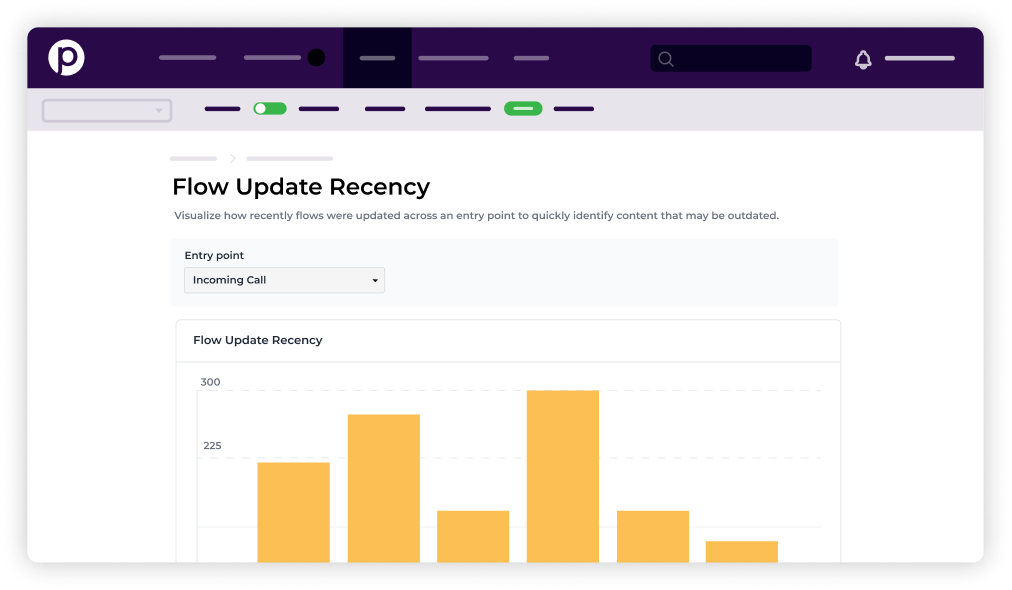
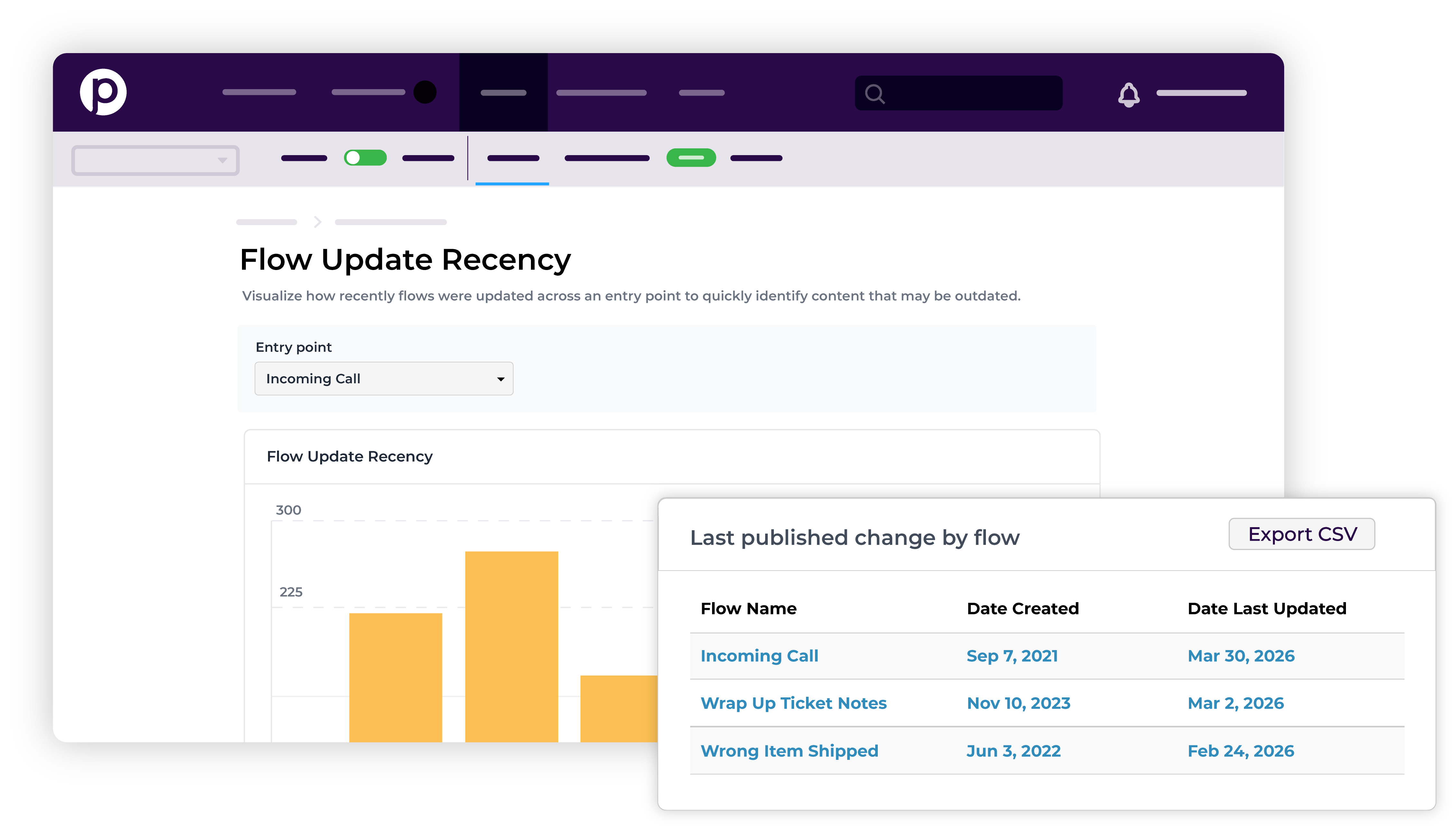
With a clear bar graph and detailed flow table, teams can quickly identify flows that need to be reviewed, updated, or retired before they impact agent performance or AI accuracy.
Turn insight into action.
Flow Update Recency gives teams the signal they need to prioritize updates, strengthen governance, and ensure the right process is always delivered at the right moment.
Flow Update Recency keeps your knowledge accurate, governed, and ready-before it becomes a risk.
What Happens When Knowledge Falls BehindThe Cost of Outdated Knowledge
Outdated knowledge is one of the most common and most avoidable risks in contact center operations and AI-driven service delivery. The data makes the cost clear:
0 %
of contact center agents say the materials they use are outdated
$ 0 M
average annual cost of poor data quality per organization (Gartner)
0 %
of organizations say data governance is a top challenge when deploying AI
Sources: CAKE.com Knowledge Management Statistics, 2025; Gartner Data Quality Research; Precisely Data Governance Adoption Report, 2024.
When AI and humans share the same knowledge base, one outdated process can trigger constant, cross-channel errors.
How often is your team working from outdated knowledge?
Benefits
Procedureflow transforms your existing documentation into interactive, decision-aware knowledge flows.
Reduces risk of outdated guidance being relied on by human or AI agents during regulated and high-impact work. A fresh knowledge base is a safer, smarter knowledge base.
Creates a real-time system of record for knowledge freshness, reducing audit risk and strengthening AI governance across your operations.
Automatically flags outdated, duplicate, or low-value content so teams can review, refresh, or retire it before it creates confusion or risk.
Gives managers a clear view of which flows need attention first, helping allocate SME and admin time effectively and align updates with policy changes, system releases, or peak periods.
Acts as a lightweight signal of process health across the org, helping leaders understand where knowledge is actively maintained and where it may need investment.
From reactive updates to proactive control over your knowledge.
See How It WorksTrack, filter, and act on knowledge freshness in seconds-so outdated content never slows down your teams or your AI.
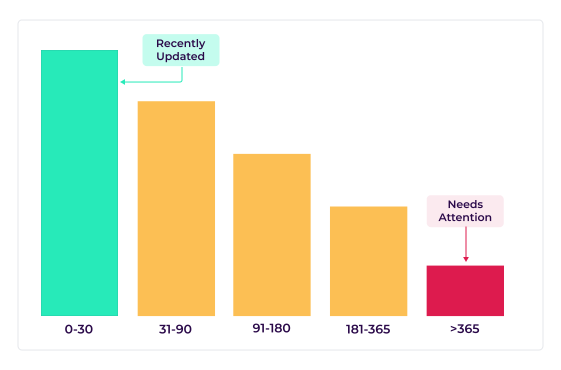
Instantly see a count of flows grouped by last updated date ranges: 0-30 days, 31-90 days, 91-180 days, 181-365 days, and beyond 365 days.
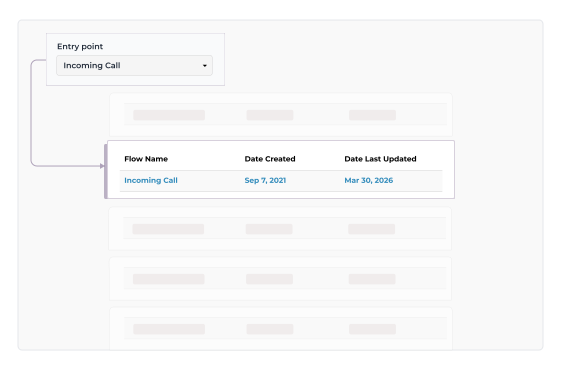
Select any entry point to scope the report to a specific area of your knowledge base, giving you a focused, actionable view.
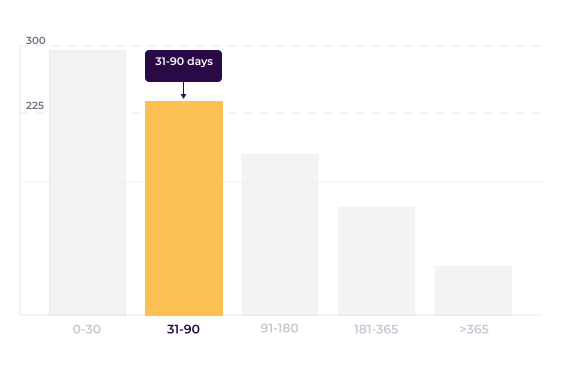
Click any bar on the graph to instantly filter the flow table to only the flows within that date range.
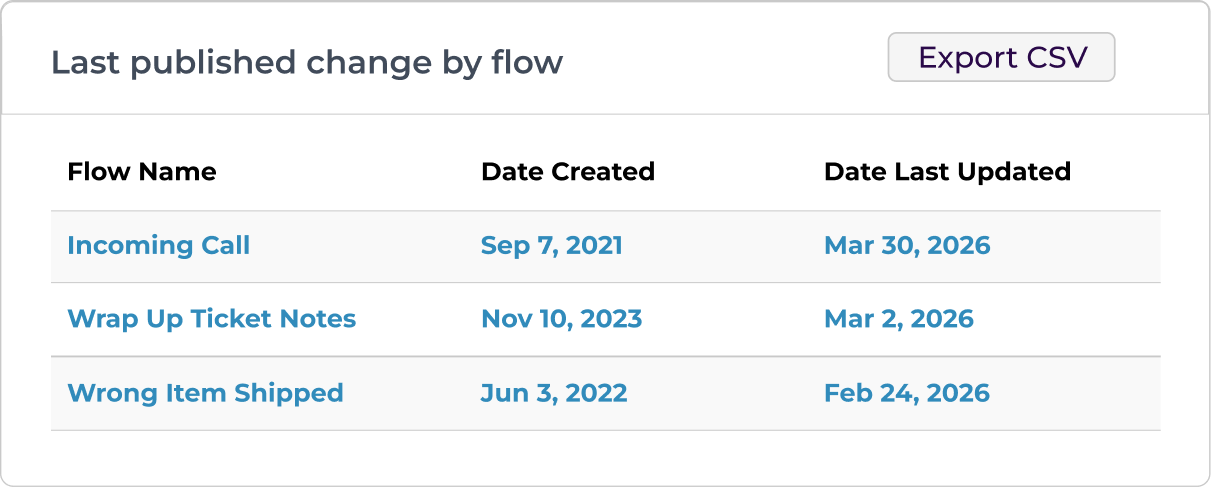
View every flow by name with direct links to the flow itself, the original change request, and the most recent change request for full context.
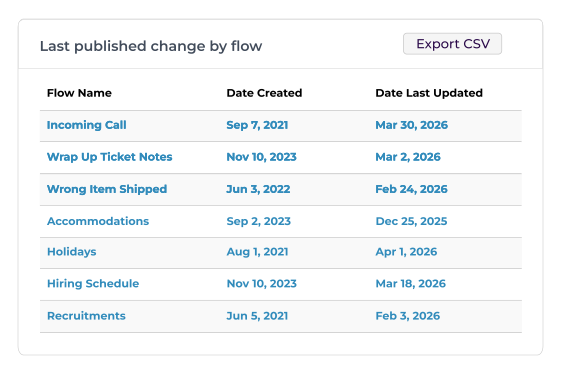
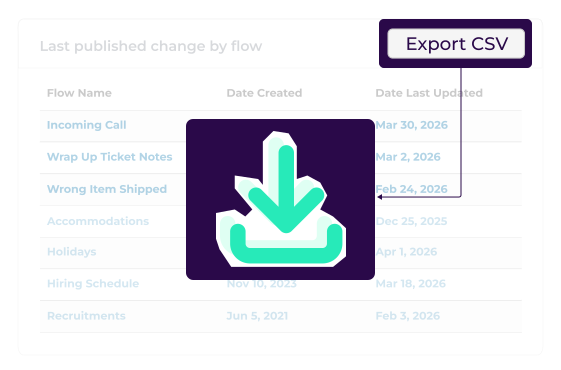
Export filtered results for planning cycles, governance reviews, and stakeholder reporting. Includes flow name, date created, date last updated, who created each flow, and which users made the last update.
Guidance that helps every team execute with confidence.
See how we compareComparison
Most knowledge management platforms offer basic version history or metadata. Here is how Flow Update Recency compares to the alternatives teams typically rely on:
| Capability | Spreadsheet Audits | Generic Version History | Flow Update Recency |
|---|---|---|---|
| Real-time freshness view | No - point-in-time only | No - requires exporting logs | No, requires exporting logs |
| Grouped by date range | Manual effort required | Not available | Built-in bar graph |
| Filter by knowledge area | Not available | Not available | Entry point filter |
| Direct links to change requests | Not available | Limited | Per flow, with full context |
| CSV export for governance | Manual build | Not available | One-click with full context |
| No setup required | Ongoing manual effort | Varies by platform | Zero setup, built into Insights |
| AI-readiness signal | No | No | Governs AI agent content |
Built for teams that need to keep knowledge accurate, trusted, and under control.
Book a personalized walkthrough to see how Flow Update Recency can automate your content governance.
Get a DemoFlow Update Recency is designed for anyone who owns, manages, or depends on operational knowledge in contact centers and knowledge-driven organizations across all verticals.
Get a clear, data-driven view of content freshness to prioritize updates and keep knowledge current across the organization.
Access detailed insights into content freshness to plan updates around policy changes, system releases, and operational priorities.
See which flows require review so agents are always working from accurate, up-to-date guidance.
Rely on a consistent governance signal to identify outdated content and reduce risk in regulated, high-impact environments.
When knowledge isn't structured, execution slows, risk increases, and confidence drops.
Flow Update Recency integrates flow-level last-updated reporting directly into Insights, giving managers a simple, powerful governance signal to assess and prioritize content maintenance, turning Insights from a reporting tool into an operational tool for managing knowledge health across your contact center.
FAQ
Flow Update Recency gives managers a fast view of how recently each process flow has been updated so stale content can be identified before it impacts performance.
It displays a bar graph grouping all flows in a selected entry point by last updated date ranges, from 0-30 days up to beyond 365 days. Clicking any bar filters a detailed flow table showing each flow name, date created, and date last updated with direct links.
The last updated date reflects when a flow was most recently modified and published in Procedureflow, giving teams clear evidence of content freshness.
Yes. Teams can export flow freshness data as CSV for governance tracking, audits, and planning discussions.
AI systems are only as reliable as the knowledge they reference. Flow Update Recency helps ensure agents and AI are guided by current, governed process content.
Most tools rely on manual audits or raw version logs. Flow Update Recency delivers a built-in, visual recency signal that is action-ready for operators.
It is available to Procedureflow users with access to Insights so managers and knowledge owners can monitor flow freshness.
The view updates as your flow metadata updates, giving teams a current recency signal without separate setup or manual tracking.